Psoriasis
Psoriasis is a chronic immune-mediated condition producing well-defined, scaly plaques. It is not contagious, it is not caused by poor hygiene, and although it cannot be cured, treatment has advanced considerably.
At a glance
- What it is
- An immune-mediated genetic skin disease in which skin cells proliferate excessively against a background of inflammation.
- Who it affects
- Around 2–4% of people. It can begin at any age, with peaks around 15–25 and 50–60 years. About one-third have an affected family member.
- Common sites
- Scalp, elbows, knees and lower back — though any area of skin can be involved, including nails and skin folds.
- Beyond the skin
- Psoriatic arthritis affects a substantial minority. Associations with metabolic and cardiovascular health are also recognised.
- Treatment
- Topical therapy, phototherapy, systemic medication and biologics, matched to severity and impact.
What is psoriasis?
In psoriasis the immune system drives skin cells to multiply far faster than normal. Instead of maturing and shedding invisibly, the cells accumulate on the surface, producing the characteristic raised plaque with adherent silvery-white scale. Beneath the scale, the skin is inflamed.
Plaques are usually symmetrically distributed with clearly defined edges — a feature that helps distinguish psoriasis from eczema. In skin folds the scale is often absent and the surface appears shiny and moist instead. Itch is usually mild, though it can be severe, and painful fissures may develop on the palms and soles.
This is an immune-mediated genetic disease involving inflammatory signalling molecules such as TNF-alpha, IL-17 and IL-23. Identifying these pathways is precisely what has made modern biologic treatments possible.
Types of psoriasis
Several distinct patterns exist, and more than one can occur in the same person over time.
Plaque psoriasis
By far the most common form.
- Well-defined raised plaques with silvery scale
- Typically scalp, elbows, knees and lower back
- Persistent without treatment
- In deeper skin tones plaques may look violet or dark brown with grey scale
Guttate psoriasis
Small drop-like lesions, often after infection.
- Numerous small scaly spots, mainly on the trunk and limbs
- Classically follows a streptococcal throat infection
- More common in children and younger adults
- May resolve, or may evolve into plaque psoriasis
Flexural (inverse)
Affecting the skin folds.
- Armpits, groin, under the breasts and between the buttocks
- Smooth, shiny and red rather than scaly
- Can be uncomfortable and is easily mistaken for a fungal infection
Nail psoriasis
Frequently accompanies skin disease.
- Small pits in the nail surface
- Discolouration and changes in nail growth
- Separation of the nail from the nail bed
- Thickening or crumbling in more severe cases
Palmoplantar
Palms and soles.
- Thickened, scaly skin on the palms and soles
- Painful cracks and fissures
- Can significantly affect the use of hands and walking
Pustular & erythrodermic
Uncommon but important.
- Sterile pustules, localised or widespread
- Erythrodermic psoriasis affects most of the skin surface
- These forms can be serious and require prompt medical assessment
Severity and impact
Treatment decisions are guided by more than the area of skin involved. How much the condition affects daily life carries real weight.
| Consideration | What it means |
|---|---|
| Extent | The body surface area affected, and formal scoring where appropriate |
| Site | Hands, feet, face, scalp and genitals affect life disproportionately even when the area is small |
| Impact | Effect on sleep, work, relationships and mood — a legitimate treatment consideration |
| Comorbidity | Psoriatic arthritis, and associations with metabolic and cardiovascular health |
| Circumstances | Age, general health, other medication, and pregnancy plans |
A limited area of psoriasis on the hands or face may justify more active treatment than a larger area elsewhere.
How psoriasis is treated
Treatment is chosen according to the pattern, severity, impact and individual circumstances. Several approaches may be combined or rotated.
Topical treatment
Suitable for limited disease and used alongside other therapy.
- Topical corticosteroids
- Vitamin D analogues
- Calcineurin inhibitors for delicate sites
- Coal tar preparations
- Emollients to reduce scale and cracking
Phototherapy
Controlled ultraviolet treatment delivered under supervision.
- Useful for more widespread plaque or guttate disease
- Requires a course of regular sessions
- Distinct from sunbeds, which are not a treatment
Systemic & biologic
For moderate to severe disease, or where topical therapy is insufficient.
- Methotrexate, ciclosporin or oral retinoids
- Biologic therapies targeting TNF-alpha, IL-17 or IL-23
- Require monitoring and specialist supervision
- Often also benefit associated psoriatic arthritis
Living with psoriasis
General measures do not replace treatment, but they reduce flares and improve how the skin feels.
Helpful
- Use emollients regularly to soften scale and reduce cracking
- Treat streptococcal throat infections promptly
- Protect skin from injury, friction and sunburn
- Address stress where you can — it is a genuine trigger for many
- Tell your doctor about joint pain, stiffness or swelling
- Attend to general health: weight, blood pressure and cardiovascular risk
Unhelpful
- Scratching or picking off scale, which can provoke new plaques
- Smoking, which aggravates psoriasis
- Excess alcohol
- Sunbeds as a substitute for medical phototherapy
- Stopping treatment abruptly without advice
- Assuming nothing more can be done — options have expanded considerably
When to see a dermatologist
Consider a specialist assessment if:
- Psoriasis is not responding to treatments already tried
- Plaques affect the scalp, face, hands, feet or genitals
- Nails are involved
- You have joint pain, stiffness or swelling
- The condition is affecting your mood, confidence or daily life
- You are uncertain whether the rash is psoriasis
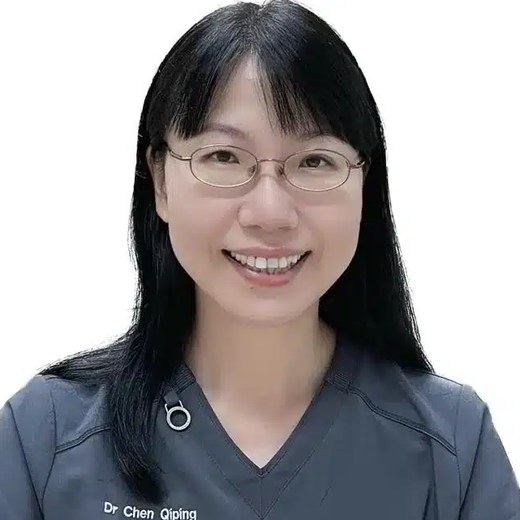
Dr Chen Qiping
Consultant Dermatologist · MBBS, MRCP (UK), M.Sc, FAMS (Dermatology)
Dr Chen practises general adult and paediatric dermatology, including psoriasis, alongside surgical, laser and cosmetic dermatology. Consultations are available in English and Mandarin.
Psoriasis — frequently asked questions
Is psoriasis contagious?
Is psoriasis curable?
What is the difference between psoriasis and eczema?
Can psoriasis affect my joints?
Why do my plaques leave marks after they clear?
What makes psoriasis flare?
References
- DermNet. Psoriasis and Treatment of psoriasis. dermnetnz.org
- MSD Manual Professional Edition. Psoriasis. Reviewed by Shinjita Das, MD MPH. msdmanuals.com
- Mayo Clinic. Types of psoriasis. mayoclinic.org
Page last reviewed: 28 July 2026.
Looking for better control of your psoriasis?
Arrange a consultation with Dr Chen Qiping at our Collyer Quay clinic — two minutes' walk from Raffles Place MRT.