Laser & Cosmetic Dermatology
Aesthetic treatment carried out within a medical dermatology practice. The emphasis is on assessment first, conservative technique, and approaches appropriate for skin that pigments readily.
At a glance
- What it covers
- Laser treatment, injectable treatments, chemical peels, facials, scar treatment and skin care advice.
- Approach
- Assessment before treatment. Device, setting and intensity chosen for your skin type and the specific condition.
- Why that matters
- Skin that pigments readily can respond to overly aggressive treatment by darkening. Conservative technique is frequently the more effective route.
- Realistic expectations
- Most treatments require a course, and results vary between individuals. What is achievable is discussed before anything is booked.
- Languages
- Consultations available in English and Mandarin.
Aesthetic treatment in a dermatology setting
Cosmetic dermatology sits alongside medical dermatology rather than apart from it. The same understanding of how skin behaves — how it inflames, how it pigments, how it heals — informs both.
That matters particularly in Singapore. Skin types common here have melanocytes that are readily provoked into producing pigment by ultraviolet light, heat and inflammation. A treatment that produces a good result in fair skin may, at the same settings, leave lasting darkening in skin that pigments easily.
The practical consequence is a preference for appropriate rather than maximal intensity, and for establishing what is actually present before treating it. Uneven pigment may be melasma, post-inflammatory pigmentation, sun-related lentigines or deeper dermal pigment such as Hori's nevus — and these do not all respond to the same approach.
What we offer
Treatments are selected according to the concern, the skin type and what is realistically achievable.
Laser treatment
Device and settings matched to the concern and skin type.
- Laser mole removal
- Laser for pigmentation
- Skin rejuvenation and skin tightening
- Laser for acne scars and enlarged pores
- Laser hair removal
Injectable treatments
Administered by a doctor following assessment.
- Botulinum toxin (Botox)
- Rejuran
- Profhilio
- Dermal fillers
- Effects are temporary and require maintenance
Peels and facials
Adjuncts to medical treatment and skin maintenance.
- Chemical peels
- Classical facial
- Hydrafacial
- Depth and agent chosen with skin type in mind
Scar treatment
Assessment first, because scars differ.
- Acne scarring — depressed and raised types
- Surgical and traumatic scars
- Treatment matched to the specific scar type
- Often combined approaches over a period
Pigmentation
Frequently the reason patients attend.
- Melasma and hyperpigmentation
- Sun-related lentigines and freckles
- Post-inflammatory pigmentation
- Topical treatment and sun protection alongside any procedure
Skin care advice
Often the least glamorous and most useful part.
- Guidance on cleansers, moisturisers and actives
- Sun protection appropriate for Singapore's climate
- Simplifying overloaded routines
- Advice on what is worth using and what is not
Questions worth asking about any aesthetic treatment
Aesthetic treatment is widely marketed, and it can be difficult to judge what is appropriate. Whichever clinic you attend, these questions are reasonable to ask:
- What exactly is being treated? A diagnosis should precede a procedure — particularly with pigmentation, where different conditions look alike but behave differently.
- Is this appropriate for my skin type? Devices and settings that suit fair skin are not automatically suitable for skin that pigments readily.
- What is realistically achievable? Improvement, not perfection, is the honest currency of aesthetic medicine.
- How many sessions, and over what period?
- What is the downtime, and what are the risks? Including the risk of pigment change.
- Who performs the treatment?
- What happens if it does not go as planned?
Before and after your procedure
General guidance. Specific instructions for your treatment will be given at consultation.
Helpful
- Tell us about all medications, supplements and recent treatments
- Avoid sun exposure and tanning in the weeks before treatment
- Settle any active acne or eczema first
- Follow aftercare instructions precisely
- Use broad-spectrum sunscreen daily afterwards
- Allow the full interval between sessions
Unhelpful
- Booking a procedure without an assessment
- Treatment over sunburnt or recently tanned skin
- Combining aggressive products or treatments in quick succession
- Picking at crusts or peeling skin afterwards
- Skipping sunscreen after a pigmentation treatment
- Expecting a single session to resolve long-standing pigmentation
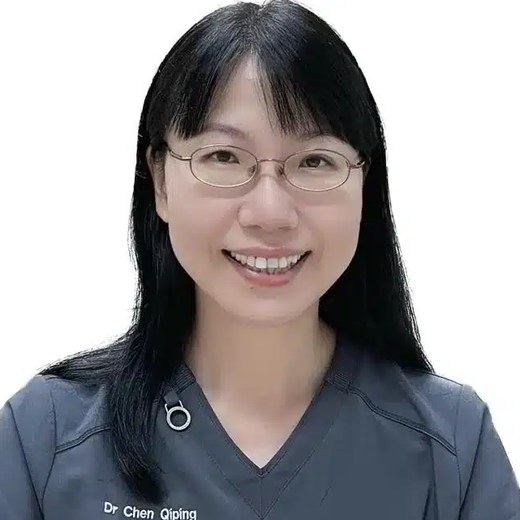
Dr Chen Qiping
Consultant Dermatologist · MBBS, MRCP (UK), M.Sc, FAMS (Dermatology)
Dr Chen practises laser and cosmetic dermatology alongside general, paediatric and surgical dermatology, with subspecialty interests in pigmentary disorders and skin cancer. Consultations are available in English and Mandarin.
Laser & cosmetic dermatology — frequently asked questions
Are lasers safe for Asian skin?
Is laser treatment painful?
How many sessions will I need?
What is the downtime after laser treatment?
Do results from injectable treatments last?
Can I have laser treatment if I have active acne or eczema?
Will sun exposure affect my treatment?
References
- DermNet. Laser treatment and Chemical peels. dermnetnz.org
- Thawabteh AM, Jibreen A, Karaman D, et al. Skin Pigmentation Types, Causes and Treatment — A Review. Molecules. 2023;28(12):4839. ncbi.nlm.nih.gov
- Kaufman BP, Alexis AF. Considerations in the treatment of skin of colour. Am J Clin Dermatol.
Page last reviewed: 28 July 2026.
Considering a laser or aesthetic treatment?
Arrange a consultation with Dr Chen Qiping at our Collyer Quay clinic — two minutes' walk from Raffles Place MRT. Assessment before treatment, always.