Paediatric Dermatology
Children's skin is not simply adult skin in miniature. Conditions present differently, treatment must be matched to age and site, and the effect on sleep and family life is often as important as the rash itself.
At a glance
- Who it is for
- Infants, children and adolescents — from newborns onwards.
- Common reasons to attend
- Eczema, birthmarks, nappy rash, viral skin infections, warts, molluscum, acne in adolescence and scalp conditions.
- Why it differs
- Treatment strength, formulation and site all need adjusting for a child's age and skin. What is appropriate for an adult may not be for a toddler.
- Parents included
- Parents stay with the child throughout, and the plan is explained so it can be carried out confidently at home.
- Languages
- Consultations available in English and Mandarin.
Dermatology for children
Paediatric dermatology covers skin, hair and nail conditions in infants, children and adolescents. Some conditions occur almost exclusively in childhood; others occur at all ages but look and behave differently in a child.
Treatment requires particular care. Children have a larger skin surface area relative to their body weight, thinner skin at certain sites, and different tolerances. The strength of a topical treatment, its formulation, and where it may safely be used are all adjusted accordingly.
There is also a practical dimension. A treatment plan only works if a parent can realistically carry it out — several times a day, on a child who may not cooperate, alongside everything else. Explaining the plan properly is part of the treatment.
Common childhood skin conditions
Some of the most frequent reasons children are brought to a dermatologist.
Infants and newborns
- Infantile eczema, often affecting the cheeks and scalp
- Cradle cap and seborrhoeic dermatitis
- Nappy rash and its complications
- Milia and neonatal rashes
- Birthmarks of various types
Birthmarks and vascular lesions
- Infantile haemangiomas — the “strawberry” birthmark
- Port-wine stains and other vascular malformations
- Congenital melanocytic naevi
- Dermal melanocytosis
- Assessment of which need treatment and which do not
Inflammatory conditions
- Atopic dermatitis (eczema)
- Contact dermatitis
- Psoriasis in childhood
- Keratosis pilaris
- Papular urticaria and insect bite reactions
Infections
- Molluscum contagiosum
- Viral warts
- Impetigo and other bacterial infections
- Fungal infections including scalp ringworm
- Hand, foot and mouth disease and other viral rashes
Adolescents
- Acne — and early treatment to limit scarring
- Excess sweating
- Pigmentary changes
- Hair and scalp conditions
- Skin concerns affecting confidence
Hair and scalp
- Alopecia areata
- Scalp ringworm (tinea capitis)
- Head lice
- Scalp psoriasis and seborrhoeic dermatitis
- Hair loss with other causes
When a birthmark needs attention
Most birthmarks are harmless and many need no treatment at all. The purpose of assessment is to identify which type is present and whether it falls into a group where earlier action is worthwhile.
Infantile haemangiomas are the most common benign growths of infancy, affecting around 4–5% of babies. They are usually not present at birth, appearing in the first one to three weeks, growing most rapidly in the first few months, then slowly regressing — around 90% have finished regressing by about four years of age.
Most require only observation. However, prompt assessment is advised if a haemangioma is:
- On the lip, or around the eye
- Anywhere on the face or the front of the neck
- In the nappy area
- Large, or growing rapidly, at any site
- Showing broken skin, ulceration or pain
- Present in numbers — multiple haemangiomas warrant further checks
Caring for a child's skin
Simple measures that make treatment easier and more effective.
Helpful
- Apply emollient generously and often for dry or eczematous skin
- Keep baths short and lukewarm rather than hot
- Use fragrance-free, soap-free cleansers
- Keep fingernails short to limit scratch damage
- Treat a flare properly and early rather than waiting for it to worsen
- Bring photographs if the rash comes and goes
Unhelpful
- Undertreating a flare through concern about steroid creams
- Starting exclusion diets without medical advice
- Using adult-strength preparations on a young child
- Scrubbing or vigorously towel-drying sensitive skin
- Sharing towels or flannels when there is a skin infection
- Waiting months before having a rapidly growing birthmark assessed
When to bring your child in
Consider an appointment if:
- A rash is not settling with treatment from your GP or pharmacy
- Your child's sleep is disturbed by itching
- Eczema flares frequently or never fully clears
- A birthmark is growing rapidly, ulcerating, or is at one of the sites listed above
- Skin infections recur
- A rash is affecting your child's confidence or school life
- You would simply like a diagnosis confirmed
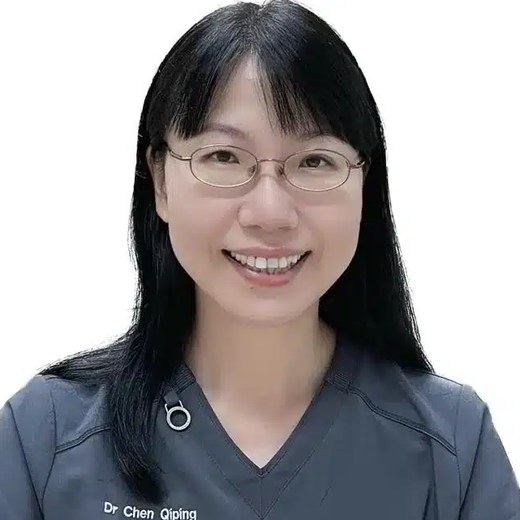
Dr Chen Qiping
Consultant Dermatologist · MBBS, MRCP (UK), M.Sc, FAMS (Dermatology)
Dr Chen practises paediatric as well as adult dermatology, and is a member of the Asian Society of Paediatric Dermatology and the International Society of Paediatric Dermatology. Consultations are available in English and Mandarin.
Paediatric dermatology — frequently asked questions
At what age can a child see a dermatologist?
Will my baby grow out of their eczema?
Are topical steroids safe for children?
What should I do about my baby's birthmark?
Is molluscum contagiosum something to worry about?
How do you make a consultation easier for an anxious child?
References
- DermNet. Skin conditions in children. dermnetnz.org
- Society for Pediatric Dermatology. Patient Perspectives handouts — Infantile Hemangiomas. pedsderm.net
- Australasian College of Dermatologists. Infantile Haemangiomas. dermcoll.edu.au
- Primary Care Dermatology Society. Birthmarks — an overview. pcds.org.uk
Page last reviewed: 28 July 2026.
Concerned about your child's skin?
Arrange a consultation with Dr Chen Qiping at our Collyer Quay clinic — two minutes' walk from Raffles Place MRT. Consultations in English and Mandarin.